


Groundbreaker Therapy does not conduct paid clinical studies, paid research studies, or compensated clinical trials.
If you arrived here looking for a paid research study or received information suggesting that we are recruiting participants for compensation, that information is incorrect.
Dr. Matthew Mandelbaum provides private psychotherapy services only. We are not currently enrolling participants for paid research studies or compensated clinical trials.
As a licensed psychologist with over 20 years of experience in the human services and mental health field, I now have the privilege of working with highly sensitive and intelligent individuals across 43 states. My work has shown me that intense emotions are a universal part of the human experience, not a personal failing. We all face moments of emotional distress that can feel overwhelming. The key isn’t to avoid these feelings but to learn how to navigate them without making a difficult situation worse.
This is where distress tolerance comes in. Low distress tolerance can lead to impulsive behaviors, unhealthy coping mechanisms, or actions that intensify our emotional pain. This guide offers practical, evidence-based DBT distress tolerance skills that you can use in real life. These techniques are designed to help you survive emotional crises and build lasting resilience.
Ready to Start Therapy?
Your healing journey can begin today. Fill out the form below to connect with a therapist who truly listens and understands.
What Is Dialectical Behavior Therapy (DBT)?
Dialectical Behavior Therapy and Emotional Regulation
Dialectical Behavior Therapy (DBT) is a form of psychotherapy initially developed to support individuals with borderline personality disorder who experience intense emotional crises. However, its effectiveness has made it a valuable tool for a wide range of mental health conditions, including anxiety, depression, trauma, and substance abuse. It helps people who struggle with impulsive actions and managing intense feelings.
How DBT Skills Support Emotional Resilience
DBT is built on four core skill modules, with a primary focus on helping you build a life worth living. While emotion regulation skills help you manage emotions long-term, distress tolerance skills are about getting through the immediate crisis without acting impulsively. This approach is grounded in accepting reality as it is, rather than fighting against difficult emotions, which often only amplifies them.
Understanding Distress Tolerance
What Distress Tolerance Really Means
Distress tolerance is the ability to manage intense emotional pain without resorting to harmful behaviors. It is a critical skill for navigating a crisis situation or any distressing situation where you feel overwhelmed. It’s important to normalize strong emotions and emotional triggers; they are a natural response to life’s challenges. The goal of these skills is to help you sit with discomfort until it naturally passes.
Signs of Low Distress Tolerance
You may have low distress tolerance if you notice patterns of impulsive behavior, self-harm, substance abuse, or complete emotional shutdown when faced with stress. This can negatively impact your relationships, work, and overall well-being. By learning new coping strategies, you can break these cycles.
DBT Distress Tolerance Skills: The Foundation
DBT Distress Tolerance Skills Explained
The distress tolerance techniques used in dialectical behavioral therapy are designed as short-term coping strategies. They are not meant to solve the underlying problem causing your emotional pain. Instead, their purpose is simple and powerful: to help you survive the moment without making things worse.
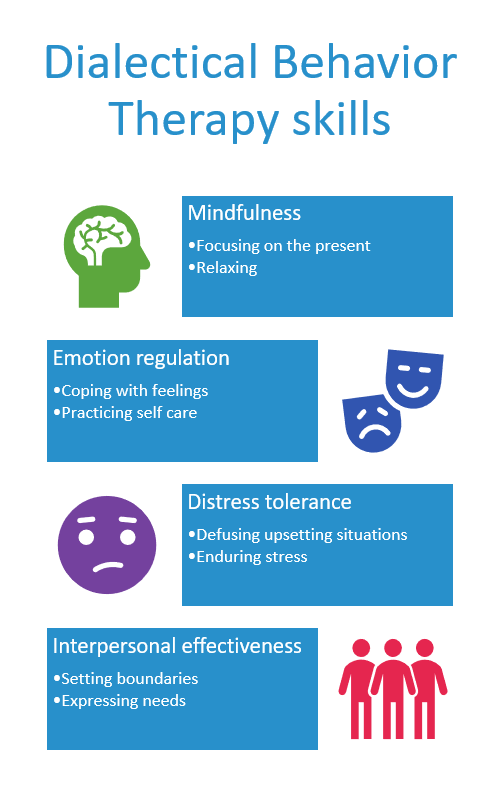
“DBT Skills 1 Narrow” by MissLunaRose12 is licensed under CC BY-SA 4.0
Crisis Survival Skills for Emotional Crises
Using DBT Skills in a Crisis Situation
An emotional crisis is a moment when intense emotional pain feels unbearable, and your logical mind may seem to shut down. In these moments, it’s more effective to work with your nervous system rather than against it. The following DBT skills are designed to do just that.
The STOP Skill
When you feel an intense emotion taking over, use the STOP skill to prevent impulsive actions.
- Stop: Freeze. Don’t move a muscle. Your emotions may want you to act, but your job is to stay still for a moment.
- Take a step back: Take a break from the situation. This could mean leaving the room or just taking a deep breath.
- Observe: Notice what is happening inside and outside of you. What are you feeling? What is the situation?
- Proceed mindfully: Act with awareness. Consider your goals and ask yourself which action will make the situation better, not worse.
This simple technique creates a crucial pause between an emotional trigger and your response, allowing you to choose a more effective path forward in challenging situations.
Distress Tolerance Techniques That Change the Body
Cold Water and Body Temperature
One of the most effective strategies for managing intense emotional distress is using cold water. Submerging your face in a bowl of cold water greater than 50 degrees fahrenheit, holding ice in your hands, or taking a cold shower can trigger the “dive response.” This physiological reaction slows your heart rate and redirects blood flow, calming your nervous system almost instantly. This change in body temperature is a powerful tool when you feel emotionally overwhelmed.
Intense Exercise for Strong Emotions
Engaging in brief, intense exercise can be a healthy way to release strong emotions. Activities like running in place, doing jumping jacks, or punching a pillow can help discharge the physical energy that comes with intense feelings like anger or anxiety. Be sure to choose an activity that is safe for your physical abilities.
Relaxation Skills for Managing Intense Emotions
Deep Breathing and Paced Breathing
Never underestimate the power of your breath. Paced breathing and mindful breathing are simple yet profound ways to promote relaxation. Try inhaling slowly for a count of four, holding for a count of four, and exhaling for a count of six. This pattern activates the parasympathetic nervous system, which helps calm your body and mind. Deep breathing is an accessible tool for better emotional regulation.
Progressive Muscle Relaxation and Paired Muscle Relaxation
Progressive muscle relaxation involves tensing and then releasing different muscle groups throughout your body. Start with your toes and work your way up your entire self. Tense a muscle group for five seconds, then release it completely for 30 seconds, noticing the difference. This practice of paired muscle relaxation helps release physical tension tied to emotional distress, calming intense feelings and promoting a sense of ease.
Self-Soothing Techniques Using the Five Senses
Self-Soothing Strategies for Emotional Pain
Self-soothing involves comforting yourself in a gentle, caring way. These self-soothing techniques use your five senses to ground you in the present moment and reduce emotional pain without avoiding it.
The Five Senses Approach
- Sight: Look at something calming, like a beautiful picture, the trees outside your window, or a softly lit room.
- Sound: Listen to relaxing music, nature sounds, or a guided meditation.
- Smell: Light a scented candle, use essential oils, or smell a flower. Grounding scents can quickly shift your emotional state.
- Taste: Sip a warm bath of herbal tea, savor a piece of chocolate, or enjoy a comforting meal.
- Touch: Take a warm bath, wrap yourself in a soft blanket, or pet your dog or cat.
Radical Acceptance: Accepting Reality Without Giving Up
What Radical Acceptance Is (and Isn’t)
Radical acceptance is a cornerstone of DBT. It means accepting reality for what it is, without judgment. It does not mean you approve of the situation or that you are giving up. Resisting reality only creates more suffering. By accepting what you cannot change, you free up energy to focus on what you can control.
Applying Radical Acceptance to Life’s Challenges
Practice radical acceptance during painful situations by reminding yourself, “This is what is happening right now.” Acknowledging the facts of a situation, even if they are painful, is the first step toward building resilience. This practice is fundamental to emotional resilience because it allows you to move forward from a place of truth.
Building Distress Tolerance Over Time
From Crisis Skills to Long-Term Emotional Regulation
Practicing DBT distress tolerance skills consistently helps build the foundation for better emotional regulation. As you become more confident in your ability to survive difficult moments, you can begin to explore the deeper aspects of your emotional world from a place of strength, or what DBT calls your “wise mind.” This integration is key to building resilience.
Practicing DBT Skills in Everyday Life
Don’t wait for a crisis to use these coping skills. Practice them during moments of low stress to build your confidence. The more you use these tools in your everyday life, the more natural they will feel when you truly need them.

When Distress Tolerance Isn’t Enough
Knowing When to Seek Professional Support
While DBT skills are powerful, they are not a replacement for therapy. If you find that your emotional crises are frequent, you are struggling with urges for self-harm, or your impulsive behavior is causing significant problems in your life, it is important to seek professional support. Working with a licensed psychologist trained in DBT can provide you with the personalized guidance needed to heal and grow.
Closing: Learning to Stay Present Through Difficult Emotions
Learning to tolerate distress is a skill, and like any skill, it takes practice. There will be setbacks and moments when emotional triggers feel overwhelming. Be compassionate with yourself through the process. With dedication and the right tools, you can learn to manage distress, navigate life’s challenges with greater ease, and create a more meaningful and fulfilling life.