


Groundbreaker Therapy does not conduct paid clinical studies, paid research studies, or compensated clinical trials.
If you arrived here looking for a paid research study or received information suggesting that we are recruiting participants for compensation, that information is incorrect.
Dr. Matthew Mandelbaum provides private psychotherapy services only. We are not currently enrolling participants for paid research studies or compensated clinical trials.
When people hear the phrase social awareness, they often think of someone who can read the room, notice social cues, understand body language, and respond appropriately in different social situations.
That is part of it.
Ready to Start Therapy?
Your healing journey can begin today. Fill out the form below to connect with a therapist who truly listens and understands.
But to me, social awareness is much deeper than simply knowing when to speak, when to listen, or how to adjust your behavior around others. Social awareness involves understanding the emotional world around you while staying connected to your own inner world.
It is the ability to notice another person’s feelings without making yourself responsible for managing them. It is the ability to practice empathy without disappearing into someone else’s experience. It is the ability to be socially aware without becoming overly self-monitoring, anxious, or disconnected from your own needs.
This distinction matters.
Many of the people I work with are highly sensitive, intelligent, observant, and emotionally perceptive. They may notice slight changes in tone, facial expressions, posture, silence, energy, or mood. In their personal relationships, workplaces, families, and communities, they are often the ones paying attention.
But sometimes, that awareness becomes exhausting.
A person may become so focused on others’ feelings that they lose track of their own. They may adjust, accommodate, soften, explain, and anticipate until their own needs become quiet. Over time, social awareness can become less like emotional intelligence and more like emotional over-responsibility.
Healthy social awareness should help us build trust, respect, and connection. It should not require self-abandonment.
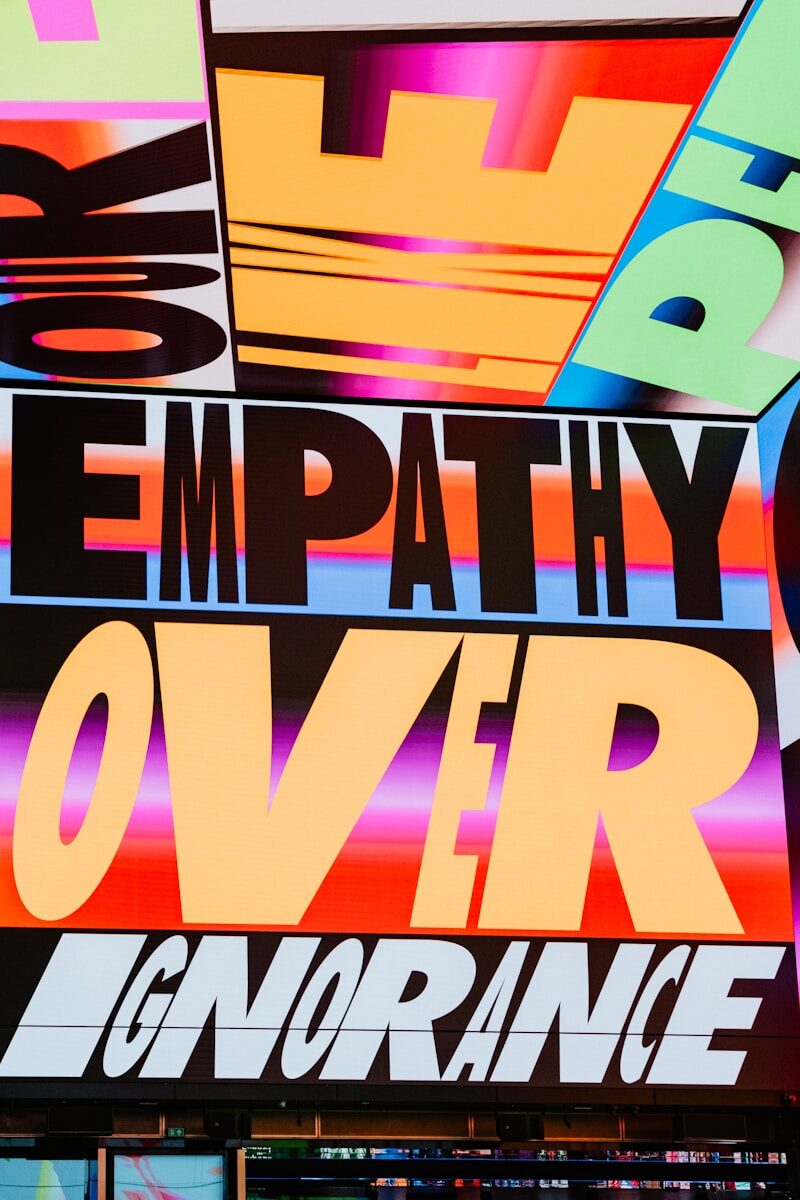
Photo by Samuel Regan-Asante on Unsplash
Why Social Awareness Important Conversations Need More Nuance
When we ask why social awareness is important work matters, the answer often sounds simple. Social awareness helps with effective communication, cooperation, problem-solving, community engagement, workplace relationships, and personal relationships.
That is true.
Social awareness skills can help us understand others’ feelings, respond appropriately, and engage with people from different backgrounds. These skills can also strengthen cultural competence, support positive communication skills, and help people contribute to a common goal.
But there is another side.
For some people, social awareness does not feel like a skill they are learning. It feels like something they have had to develop for survival. They may have grown up in environments where they needed to monitor the emotional state of others very carefully. They may have learned to read verbal and nonverbal cues because missing those cues had consequences.
In adulthood, that same ability can become both a strength and a burden.
A person may be excellent at noticing what others need, but struggle to identify what they need. They may be skilled at keeping the peace, but unsure how to speak honestly. They may be praised for being thoughtful, considerate, or emotionally mature, while privately feeling resentful, anxious, or unseen.
That is why social awareness needs balance. The goal is not to become less caring. The goal is to become more grounded while caring.
Active Listening Without Overfunctioning
Active listening is one of the most important parts of social awareness. It means giving another person your full attention, listening beyond the words themselves, asking open-ended questions, and trying to understand the meaning behind what someone is sharing.
When we practice active listening, we are not just waiting for our turn to speak. We are present. We are engaged. We are paying attention to tone, emotion, context, and what may be unspoken.
This can build trust in powerful ways.
In therapy, active listening allows a person to feel seen and understood. In relationships, it can reduce defensiveness and deepen connection. In the workplace, it can improve collaboration, leadership, employee engagement, and problem-solving.
But active listening does not mean absorbing everything.
There is a difference between listening with empathy and taking responsibility for another person’s emotional state. There is a difference between being present and becoming emotionally flooded. There is a difference between wanting to understand someone and believing you must fix what they feel.
Healthy listening includes boundaries.
You can listen carefully and still disagree.
You can validate someone’s feelings without abandoning your perspective.
You can care about someone’s pain without making it your job to remove it.
You can be present without becoming consumed.
This is especially important for people who naturally give extra effort in relationships. If your first instinct is to make sure everyone else is okay, active listening may need to be paired with self-awareness.
As you listen to another person, it can help to quietly ask yourself, “What am I noticing in them, and what am I noticing in me?”
Photo by Tara Winstead on Pexels
Social Awareness Skills Begin With Self-Awareness
Strong social awareness skills are not separate from self-awareness. In fact, the two support each other.
If I am not aware of my own emotions, fears, needs, and reactions, I may misread other people through the lens of my own anxiety. I may assume someone is upset with me when they are simply tired. I may interpret silence as rejection. I may over-apologize, over-explain, or try to control the emotional tone of a conversation.
Self-awareness helps us slow down.
It gives us space to ask:
What am I feeling right now?
What story am I telling myself?
What evidence do I actually have?
Am I responding to this person, or am I responding to an old pattern?
Am I trying to connect, or am I trying to prevent discomfort?
This matters because social awareness is not mind-reading. It is not the ability to know exactly what another person is thinking or feeling. It is the ability to stay curious, observant, and respectful while recognizing that your interpretation may not be complete.
That humility is important.
A socially aware person does not assume they always know. They pay attention, ask thoughtful questions, and remain open to learning more.
Developing Social Awareness Takes Conscious Effort
Developing social awareness is an ongoing process. It takes conscious effort, practice, and a willingness to reflect on how we interact with the world around us.
Some people develop social awareness by observing others closely. Some learn it through education, leadership roles, personal relationships, or community engagement. Others strengthen it through therapy, where they can examine patterns in their relationships and practice new emotional skills.
Developing social awareness may include:
Practicing active listening.
Noticing social cues without immediately reacting.
Learning how culture, family history, and different backgrounds shape communication.
Paying attention to nonverbal cues.
Asking open-ended questions.
Building tolerance for emotional discomfort.
Recognizing when empathy is turning into over-responsibility.
Learning how to stay present with your own needs.
This work can be especially meaningful for people who have spent much of their lives adapting to others. For them, developing social awareness may not mean noticing more. It may mean interpreting more accurately and responding with more self-respect.
Awareness is only helpful when it leads to choice.
Emotional Intelligence Includes Empathy and Boundaries
Emotional intelligence is often described as the ability to understand and manage emotions, both your own and those of others. Social awareness is a key part of emotional intelligence because it helps us recognize what may be happening emotionally in a social interaction.
But emotional intelligence is not just empathy.
It also includes self-regulation, emotional clarity, communication skills, and the ability to pause before reacting. It involves understanding others’ feelings while still honoring your own.
This is where many sensitive and high-achieving people can struggle. They may have strong empathy and strong social awareness, but weaker boundaries. They may know exactly how to support someone else, but have difficulty asking for support themselves. They may be able to identify tension in a room, but feel unsure how to care for themselves inside that tension.
True emotional intelligence asks us to hold both.
I can understand your perspective, and I can still have my own.
I can care about your feelings, and I can still set a boundary.
I can recognize your pain, and I can still choose what is healthy for me.
I can be compassionate without becoming responsible for everything.
That balance is not always easy, but it is central to emotional maturity.
Body Language Can Tell Us Something, But Not Everything
Body language is an important part of social awareness. Posture, gestures, eye contact, facial expressions, movement, and tone can all offer meaningful information in a conversation.
A person may say they are fine while their body looks tense. Someone may say very little, but their posture suggests discomfort. Another person may seem distracted, withdrawn, or restless, even if their words are polite.
These cues matter.
At the same time, body language should be interpreted carefully. People have different communication styles, cultural backgrounds, neurodivergent traits, trauma histories, and personal habits. What looks like disinterest in one person may be anxiety in another. What looks like confidence may be a protective mask. What looks like calm may be an emotional shutdown.
Social awareness requires curiosity, not certainty.
Rather than assuming, it can be helpful to ask gently:
“I noticed you got quiet. Do you want to talk about what came up?”
“I may be reading this wrong, but I’m wondering how that landed for you.”
“You seem a little tense. Is now still a good time to talk?”
This kind of communication creates room for clarification. It respects the other person’s experience instead of turning your interpretation into a fact.
Teach Social Awareness by Modeling Respect
We often teach social awareness not through lectures, but through modeling. Parents, teachers, therapists, leaders, friends, and community members all teach social awareness through the way they engage with others.
We teach it when we listen without interrupting.
We teach it when we repair after conflict.
We teach it when we respect different backgrounds and perspectives.
We teach it when we ask questions instead of making assumptions.
We teach it when we stay kind without becoming passive.
We teach it when we set boundaries without cruelty.
This is especially important in families, schools, workplaces, and diverse communities. Social awareness is not only about being polite. It is about learning how to recognize the humanity of another person while remaining grounded in your own.
For children, students, employees, and emerging adults, social awareness grows when people are given opportunities to practice empathy, perspective taking, cooperation, and respect.
But adults need these opportunities too.
Many people enter adulthood with limited models of healthy communication. They may have learned avoidance, people-pleasing, defensiveness, emotional withdrawal, or conflict escalation. Therapy can help people unlearn these patterns and develop more intentional ways of relating.
Employee Engagement Depends on Feeling Seen and Respected
In the workplace, social awareness has a direct connection to employee engagement. People are more likely to engage when they feel understood, respected, and valued. Leaders with strong social awareness can often notice when team members are overwhelmed, disengaged, confused, or hesitant to speak.
This does not mean leaders should become therapists. It means they should remain attentive to the human beings in front of them.
Employee engagement is not only about productivity, meetings, performance reviews, or business outcomes. It is also about whether people feel safe enough to contribute, ask questions, share ideas, and admit when something is not working.
Socially aware leaders pay attention to the emotional tone of a team. They notice who speaks often and who is quiet. They recognize when “quick drive-by meetings” may not be enough for meaningful communication. They make space for feedback. They understand that effective communication includes both clarity and care.
Social awareness can also help teams work through conflict. When people are able to recognize social cues, practice active listening, and respond thoughtfully, they are more likely to build trust and solve problems together.
But again, balance matters.
A socially aware workplace should not depend on one or two emotionally perceptive people carrying everyone else. Healthy cultures distribute responsibility. They encourage communication, respect, and accountability across the group.
Facial Expressions and the Need for Emotional Curiosity
Facial expressions can reveal a great deal. A brief look of confusion, sadness, frustration, surprise, or discomfort can change the direction of a conversation if we are paying attention.
But facial expressions can also be misunderstood.
Someone may smile when they are nervous. Someone may look serious when they are concentrating. Someone may avoid eye contact because they are overwhelmed, not because they are dishonest or uninterested.
This is why social awareness should be paired with emotional curiosity.
Instead of assuming we know what a facial expression means, we can use it as an invitation to check in. We can be attentive without becoming intrusive. We can notice without overanalyzing.
For highly sensitive people, this distinction can be freeing. You may notice every shift in expression. You may feel the emotional temperature of a room quickly. But you do not have to decode everything perfectly. You do not have to solve every moment of tension. You do not have to make every person comfortable.
Sometimes the most socially aware response is simply to stay present and let the other person have their experience.
Expressions and Body Language in Personal Relationships
In close relationships, expressions and body language often carry years of emotional meaning. A sigh, a pause, a glance, or a shift in tone can feel much larger than it appears on the surface.
This is one reason personal relationships can be so challenging.
We are not only responding to the present moment. We may also be responding to past hurts, old patterns, attachment fears, family dynamics, and previous experiences of rejection or misunderstanding.
For example, a partner’s silence may trigger anxiety. A friend’s delayed response may feel like abandonment. A family member’s tone may bring up years of feeling dismissed. In these moments, social awareness can help us notice what is happening, but self-awareness helps us understand why it feels so powerful.
A healthier response might sound like:
“I’m noticing I’m feeling anxious, and I want to check my interpretation before I react.”
“When you got quiet, I started to worry I had done something wrong. Is that what happened?”
“I want to understand you, but I also need to slow this conversation down.”
This kind of communication combines empathy, self-regulation, and honesty. It allows connection without emotional guessing games.
Self Regulation Helps You Stay Connected Without Losing Yourself
Self-regulation is essential for healthy social awareness. Without it, awareness can become overwhelming.
If you notice every emotion in the room but cannot regulate your own nervous system, you may become anxious, reactive, avoidant, or overly accommodating. You may rush to fix discomfort. You may agree when you want to disagree. You may silence yourself because another person seems upset.
Self-regulation helps you stay present.
It allows you to notice discomfort without immediately trying to eliminate it. It helps you pause before responding. It supports better decision-making, clearer communication, and healthier boundaries.
Self-regulation might look like taking a breath before answering. It might mean asking for time to think. It might mean grounding yourself by feeling your feet on the floor. It might mean reminding yourself, “Their emotion is real, but it is not automatically my responsibility to fix.”
This is a powerful shift.
The goal is not to become detached. The goal is to remain connected without becoming consumed.
Socially Aware Does Not Mean Self-Abandoning
Being socially aware does not mean you must become endlessly agreeable. It does not mean you must anticipate every need, prevent every conflict, or keep every interaction smooth.
Sometimes, strong social awareness means recognizing that a conversation needs honesty. Sometimes it means naming a boundary. Sometimes it means allowing another person to be disappointed. Sometimes it means noticing that you are over-accommodating and choosing a different response.
This can feel difficult for people who have learned to equate connection with compliance.
But a real connection requires room for truth.
If you only show the version of yourself that is easy for others to accept, your relationships may feel peaceful on the surface but lonely underneath. You may be liked, but not fully known. You may avoid conflict, but also avoid intimacy.
Healthy social awareness helps us engage more honestly.
It allows us to ask, “How can I be considerate of you without abandoning myself?”
The Role of Cultural Competence and Diverse Communities
Social awareness also includes cultural competence. We live, work, and build relationships with people from diverse communities and different backgrounds. Our experiences shape how we communicate, express emotion, interpret respect, understand conflict, and define connection.
A socially aware person does not assume their own perspective is universal.
They remain open to learning. They ask questions. They recognize that social cues, eye contact, tone, personal space, and emotional expression can vary across cultures, families, identities, and communities.
This kind of awareness is not about perfection. It is about respect.
It asks us to engage with humility. It asks us to understand that our way of seeing the world is meaningful, but not complete. It asks us to make space for difference without rushing to judgment.
In therapy, this can be especially important. Each person brings a unique story, shaped by relationships, culture, education, family, work, community, and lived experience. Part of meaningful growth is learning how to honor that story while also becoming more flexible in how we relate to others.
How to Build Strong Social Awareness in Daily Life
Strong social awareness grows through practice. It is not something we simply have or do not have. It is a set of emotional skills that can develop over time.
Here are a few strategies I often encourage people to explore:
Practice active listening by giving your full attention instead of preparing your next response.
Notice body language and nonverbal cues, but avoid assuming you know exactly what they mean.
Ask open-ended questions when you are unsure.
Reflect on your own emotions before reacting to someone else’s.
Pay attention to patterns in your personal relationships.
Practice empathy while remembering that another person’s feelings are not automatically your responsibility.
Seek feedback from people you trust.
Notice when you are over-accommodating.
Build self-regulation skills so you can stay grounded in emotionally charged conversations.
These practices help create a better understanding of both yourself and others. Over time, they can improve relationships, strengthen communication skills, and support your overall well-being.
Social Awareness, Therapy, and Personal Growth
Therapy can be a meaningful place to develop social awareness because it gives you room to slow down and examine what happens inside relationships.
You can explore the patterns that shape how you interact. You can look at the ways you read others, protect yourself, seek approval, avoid conflict, or silence your own needs. You can learn to identify whether your social awareness is helping you connect or causing you to lose yourself.
For some people, the work involves becoming more aware of others. For others, the work involves becoming less responsible for others.
Both can be true.
A person may need to practice empathy and boundaries at the same time. They may need to develop stronger communication skills while also learning to tolerate discomfort. They may need to engage more openly while also trusting themselves more deeply.
This is where growth becomes personal.
Social awareness is not only about how you function in a room full of people. It is about how you live in relationship with the world while remaining connected to your own mind, body, values, and emotional truth.

Photo by Felicia Varzari on Unsplash
Helpful Resources for Social Awareness, Emotional Intelligence, and Healthy Communication
If you are learning more about social awareness, empathy, active listening, emotional intelligence, boundaries, or how to stay connected to others without losing yourself, these resources can help. They offer practical education on communication, social-emotional skills, cultural awareness, self-regulation, and meaningful relationships.
- CASEL: What Is the CASEL Framework? | A helpful overview of social awareness as the ability to understand others’ perspectives, empathize with people from diverse backgrounds, and recognize social norms and support systems.
- Greater Good in Education: Social Awareness and Relationship Skills | A useful resource on how social awareness and relationship skills support empathy, communication, perspective-taking, and stronger connections.
- Greater Good in Action: Active Listening | A practical active listening exercise that encourages full attention, empathy, validation, and deeper understanding in conversation.
- NCBI Bookshelf: Active Listening | A more detailed educational resource on active listening as a professional communication skill that involves attention, acknowledgment, feedback, and mutual understanding.
- Greater Good Science Center: Empathy | A reader-friendly resource on what empathy is, why it matters, and how it can strengthen relationships, compassion, and social connection.
- Greater Good Science Center: What Is Empathy? | A helpful explanation of empathy, including the ability to sense and understand another person’s emotions while still maintaining your own perspective.
- Harvard Business School Online: Emotional Intelligence in Leadership | A useful resource on emotional intelligence, including self-awareness, self-management, social awareness, and relationship management.
- Harvard Division of Continuing Education: How to Improve Your Emotional Intelligence | A practical guide to developing emotional intelligence through self-awareness, self-regulation, social awareness, and social skills.
- CDC: Social Connection | A helpful public health resource on why feeling connected, cared for, valued, and supported matters for mental and physical health.
- CDC: Improving Social Connectedness | A practical resource with simple ways to build meaningful social connection, including reaching out, checking in, and strengthening supportive relationships.
- CDC: How to Use Empathy in Health Communication | A clear guide to using empathy in communication, especially when people feel vulnerable, uncertain, or misunderstood.
- APA Inclusive Language Guide | A useful resource for communicating with cultural sensitivity, respect, and awareness of different identities, backgrounds, and lived experiences.
- Michigan State University Extension: Active Listening and Empathy for Human Connection | A practical resource on how active listening and empathy can improve relationships with partners, family members, friends, and coworkers.
- APA Monitor: Social Awareness and Emotional Skills | A helpful psychology resource on how social and emotional learning can support social competence, mental health, behavior, and stronger relational skills.
These resources can help you learn more about social awareness, active listening, empathy, emotional intelligence, and respectful communication. Still, social awareness is not only about understanding other people more clearly. It is also about staying connected to yourself while you do.
When you can notice others without disappearing, listen without overfunctioning, and care without carrying everything, social awareness becomes more than a social skill. It becomes a way of building relationships that are honest, grounded, and emotionally sustainable.
Staying Connected Without Losing Yourself
Social awareness can help us build richer relationships, stronger communities, healthier workplaces, and more meaningful lives. It can help us listen more deeply, communicate more clearly, and respond to others with greater care.
But the healthiest form of social awareness includes the self.
It allows you to notice others without disappearing.
It allows you to practice empathy without carrying everything.
It allows you to read the room without betraying your own truth.
It allows you to stay connected without losing yourself.
For highly sensitive, intelligent, and thoughtful individuals, this balance can be life-changing.
You do not have to become less aware. You may simply need to become more anchored.
More anchored in your needs.
More anchored in your values.
More anchored in your body.
More anchored in the knowledge that connection does not require self-erasure.
When social awareness is grounded in self-trust, it becomes more than a communication skill. It becomes a pathway toward healthier relationships, stronger emotional intelligence, and a life that feels more honest, connected, and whole.