


Groundbreaker Therapy does not conduct paid clinical studies, paid research studies, or compensated clinical trials.
If you arrived here looking for a paid research study or received information suggesting that we are recruiting participants for compensation, that information is incorrect.
Dr. Matthew Mandelbaum provides private psychotherapy services only. We are not currently enrolling participants for paid research studies or compensated clinical trials.
A strong work ethic is often treated as an unquestioned good. It is praised in school, rewarded in the workplace, and woven into how many people define success. For many high-achieving adults, it becomes a source of pride, identity, and stability. They learn to be dependable, disciplined, responsible, and productive. They meet deadlines, take initiative, and hold themselves to a high level of accountability.
There is real value in that.
Ready to Start Therapy?
Your healing journey can begin today. Fill out the form below to connect with a therapist who truly listens and understands.
But in my work, I often meet thoughtful, intelligent, emotionally insightful people who have built their lives around discipline and achievement, yet still feel restless, disconnected, or chronically unsatisfied. They know how to work hard. They know how to follow through. They know how to produce high-quality work. What they do not always know is how to stop, how to rest without guilt, or how to feel like they are enough when they are not actively accomplishing something.
That is where the conversation becomes deeper than productivity.
A strong work ethic can absolutely support success, professional growth, and a meaningful career. But when your worth becomes too tightly tied to output, your drive can start to cost you your peace, your relationships, and even your sense of self.

Photo by Vitaly Gariev on Unsplash
Work Ethic and the Difference Between Drive and Overidentification
A healthy work ethic is not the same thing as overidentification with productivity.
A healthy drive usually includes discipline, dedication, commitment, pride in quality work, and the ability to stay focused on meaningful goals. It helps people prioritize tasks, use time management skills, contribute to a team, and build a solid reputation in their workplace. It often reflects values like responsibility, honesty, initiative, and respect for other people’s time and effort.
Overidentification looks different.
This is when productivity stops being one part of your life and starts becoming the measure of your value. You may feel uncomfortable when you are not being useful. Rest may feel lazy rather than restorative. Relationships may start to feel like interruptions. You may keep reaching goals, yet still struggle to feel satisfied. Even success can feel temporary because the next task is already calling for your attention.
When that happens, your work ethic may still look impressive from the outside, but inside it may feel rigid, anxious, or emotionally costly.
Strong Work Ethic Without Burnout
Many people want a strong work ethic because they genuinely care about doing things well. They want to complete tasks efficiently, meet commitments, and create something valuable. They want to demonstrate work ethic in a way that reflects integrity, reliability, and self-respect.
That is not the problem.
The problem begins when hard work becomes your only mode. If you are always pushing, always optimizing, always trying to maximize productivity, you may gradually lose touch with other parts of yourself. Your emotional life gets narrowed. Your body stays tense. Your relationships get what is left over. You become highly capable but not necessarily well.
This is especially common among people who are praised for being consistent, independent, and high performing. They often do not notice the cost until they feel emotionally flat, physically depleted, or unable to enjoy what they have worked so hard to build.
A sustainable, strong work ethic includes effort, but it also includes limits. It allows ambition without self-erasure.
Good Work Ethic vs Bad Work Ethic
People often think of a good work ethic and a bad work ethic in simple workplace terms.
A good work ethic is usually associated with being reliable, staying organized, showing up on time, taking responsibility, maintaining focus, following through, and producing high-quality work. These are qualities employers and colleagues tend to respect because they help teams function well and help projects move forward.
A bad work ethic or poor work ethic is usually described differently. It may involve poor follow-through, blaming others when things go wrong, avoiding responsibility, contributing poor work, missing deadlines, or expecting others to carry the load. In that sense, most people understand why a work ethic is important in a career context.
But there is another version of imbalance that is easier to miss.
Sometimes what looks like a good work ethic in the workplace hides a difficult relationship with the self. Someone may be outwardly responsible and extremely productive, yet privately driven by fear, self-criticism, or a constant need to prove their worth. They may not shift blame or avoid responsibility. In fact, they may take too much responsibility. They may overfunction at work, overcommit in relationships, and feel guilty anytime they slow down.
That pattern is often admired. It can also be deeply exhausting.
Poor Work Ethic Is Not the Only Problem
When people worry about a poor work ethic, they tend to imagine underperformance, inconsistency, or lack of commitment. And yes, those patterns can create real problems.
But emotional suffering is not limited to those with a weak work ethic. Many of the people I work with have the opposite issue. Their standards are so high, and their sense of responsibility is so strong, that they have almost no room left for softness, spontaneity, or emotional replenishment.
They may be the person who always takes the lead, always handles the extra project, always shows up for colleagues, always stays late, and always keeps the team moving. They are often seen as responsible, reliable, and indispensable. Yet privately, they may feel trapped by the very qualities that earn them praise.
So while a poor work ethic can create problems, relentless over-functioning can create a different kind of suffering. Both can interfere with well-being. Both deserve attention.
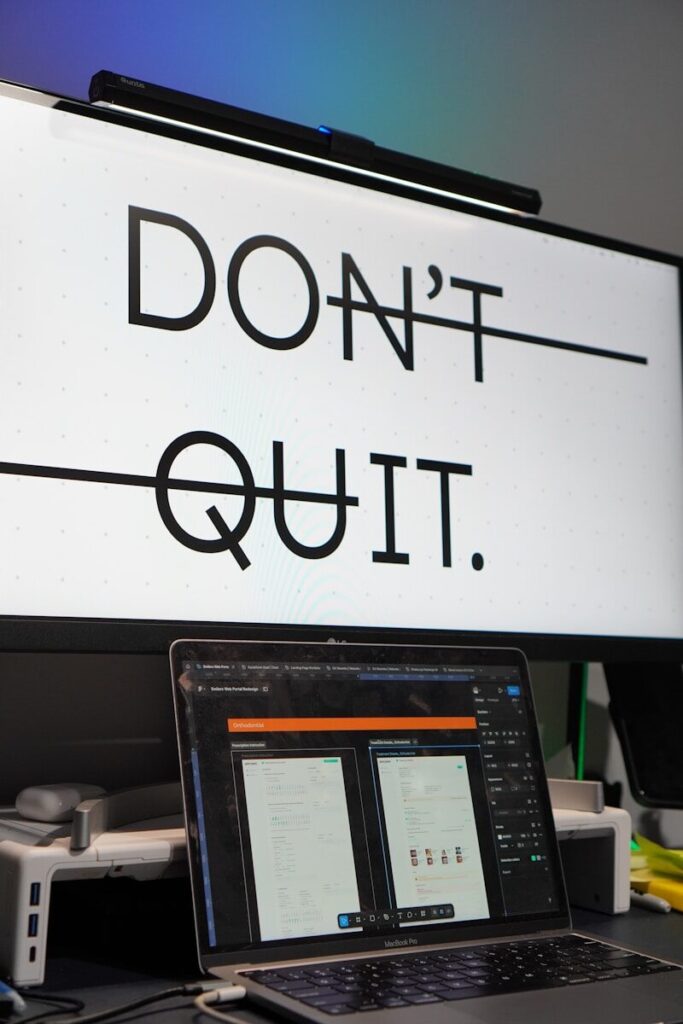
Photo by Shomitro Kumar Ghosh on Unsplash
Time Management Skills and the Inner Experience of Pressure
Good time management skills matter. They help you prioritize tasks, meet deadlines, stay organized, and reduce unnecessary stress. They are useful in any job, and they often support a more effective and productive life.
But time management alone does not solve the deeper issue for people who are emotionally fused with achievement.
You can have excellent calendars, systems, routines, and planning habits and still feel driven by pressure rather than purpose. You can manage your schedule well and still feel unable to rest. You can become highly efficient at completing tasks and still find that your inner life remains tense, self-critical, or unsatisfied.
This is why emotional balance matters.
Without that balance, time management skills can become one more tool for self-pressure instead of self-support. A carefully planned life can still feel joyless if every moment is organized around proving something.
Healthy time management should help create a life that is more spacious, not just more optimized.
Work Ethic Examples That Reflect Emotional Health
When people think about work ethic examples, they often think of practical workplace behaviors. Showing up prepared. Finishing a project on time. Taking initiative. Being honest. Following through. Producing quality results. Respecting coworkers. These are all valuable.
But I would expand the definition.
Healthy work ethic examples also include:
- Knowing when to stop working rather than pushing past your limits
- Setting boundaries even when you are capable of doing more
- Asking for help instead of carrying everything alone
- Staying accountable without turning every mistake into a character judgment
- Making room for relationships, rest, reflection, and play
- Being productive without becoming emotionally unavailable
- Working from values, not only from fear
These qualities are often overlooked because they do not fit the narrow image of the person who always works the hardest. But they matter. They protect sustainability. They help you stay connected to the life your work is meant to support.
The Protestant Work Ethic and the Pressure to Earn Worth
The phrase Protestant work ethic is often used to describe a cultural ideal that links discipline, hard work, morality, and personal value. Even if someone does not consciously identify with that tradition, many people still absorb a version of the same message: productive people are worthy people. Rest must be earned. Struggle proves commitment. Satisfaction comes after you do more.
That mindset can be powerful. It can also become punishing.
When a person internalizes the idea that rest is suspect or that their value comes from being useful, they may struggle to enjoy life outside achievement. Leisure can feel unproductive. Emotional needs can feel inconvenient. Relationships can become secondary to output. Even accomplishments may not bring much satisfaction because the standard keeps moving.
This does not mean discipline is bad. It means discipline without self-compassion can become harsh. A person can be principled, committed, and growth-oriented without treating themselves like a machine.
Why is Work Ethic Important, but Not Everything
Yes, work ethic important. It supports professional growth, helps people contribute meaningfully, and often leads to a stronger sense of progress and competence. Employers value it. Teams depend on it. Careers often benefit from it.
But work ethic is not the whole of a life.
Your value is not reducible to your job, your productivity, or the number of tasks you can hold together at once. You are not only your discipline, your output, your deadlines, or your role in the workplace. You are also your relationships, your values, your emotional life, your body, your creativity, your inner world, and your capacity for connection.
This is where many high-achieving people get stuck. They know how to succeed professionally, but they are less certain how to live in a way that feels deeply aligned, satisfying, and emotionally sustainable.
A career can matter greatly without becoming your entire identity.
Team Players, Soft Skills, and the Human Side of Success
In many workplaces, people focus heavily on outcomes. Did you meet deadlines? Did you deliver quality work? Did you complete the project? Those things matter.
But true success also depends on soft skills, relational awareness, and the ability to function as team player. That includes communication, emotional regulation, accountability, flexibility, and respect for colleagues. It includes knowing how to recover from mistakes without collapsing into shame or defensiveness.
Some people can perform at a high level but struggle relationally. Others are dependable and productive but emotionally unavailable. Some are so focused on getting everything right that they become rigid, irritable, or disconnected from the people around them.
A healthy work ethic should make room for humanity. It should support not only good performance, but also healthier collaboration, deeper satisfaction, and a stronger sense of integrity. Sustainable success usually depends on both competence and connection.
Hard Work, Satisfaction, and the Risk of Never Feeling Done
Hard work can be deeply meaningful. It can help you develop mastery, create momentum, and build something you are proud of. It can give you a sense of purpose, structure, and contribution. There is nothing wrong with ambition. There is nothing wrong with wanting excellence.
The question is whether your effort leads to a fuller life or keeps you in a constant state of striving.
For many people, the problem is not that they work hard. The problem is that they do not know how to feel done. There is always another goal, another deadline, another area to improve, another metric to hit. Satisfaction keeps getting postponed.
That kind of striving often creates a painful split. Outwardly, there is success. Inwardly, there is chronic pressure.
Learning how to feel satisfaction does not mean abandoning ambition. It means allowing your life to include moments where nothing needs to be earned. It means developing an internal sense of enough.

Photo by Yan Krukau on Pexels
How to Demonstrate Work Ethic Without Losing Yourself
If you want to demonstrate work ethic in a healthy way, start by asking what your effort is in service of.
Is your drive connected to values you genuinely care about? Or is it fueled mostly by fear, perfectionism, or the need to prove yourself? Do you work hard because the work matters to you, or because slowing down makes you feel guilty or exposed?
Healthy effort usually includes a few key elements:
- Clarity about what matters most
- The ability to prioritize tasks rather than treat everything as equally urgent
- Enough time management to reduce chaos without becoming obsessive
- Accountability without constant self-punishment
- Respect for your body, relationships, and emotional life
- Willingness to rest before burnout forces it on you
This kind of balance does not make you less disciplined. It makes your discipline more sustainable.
When Work Ethic Starts to Cost You Too Much
Sometimes the signs are subtle. You may still be succeeding, but your inner life tells a different story.
You may notice that:
- You cannot relax without feeling unproductive
- Your relationships get less attention than your responsibilities
- Your self-esteem rises and falls with your output
- You feel resentful when others set boundaries that you do not allow yourself
- You are respected for your discipline, but do not feel genuinely fulfilled
- A minor mistake feels like a major personal failure
- You keep achieving goals without feeling much satisfaction afterward
When these patterns show up, it may be time to examine not just your habits, but the emotional meaning of work in your life.
FAQs About Work Ethic
What is a healthy work ethic?
A healthy work ethic includes discipline, reliability, accountability, and pride in doing meaningful, high-quality work, but it does not require you to sacrifice your relationships, emotional life, or well-being. The core idea in this blog is that work should support your life, not consume it.
Can a strong work ethic become unhealthy?
Yes. A strong work ethic can become unhealthy when productivity starts to define your worth, rest feels guilty instead of restorative, and achievement comes at the expense of peace, connection, or satisfaction. Heavy workloads, long hours, low control, and poor work-life balance are also recognized burnout risk factors.
Is rest part of a good work ethic?
Yes. In the blog’s framing, rest is not the opposite of discipline. It is part of a sustainable discipline. NIMH recommends setting goals and priorities, deciding what must get done now and what can wait, and learning to say no when you are taking on too much. The Surgeon General’s workplace framework also treats work-life harmony as a core part of well-being.
How can I tell if my self-worth is too tied to productivity?
Some common signs include feeling unproductive when you relax, letting your self-esteem rise and fall with output, resenting other people’s boundaries, struggling to feel done, or continuing to achieve without feeling much satisfaction afterward. Those are all patterns this blog names as cues that work may be costing you too much internally.
Do time management skills solve the whole problem?
Not always. Time management skills matter and can reduce unnecessary stress, but they do not automatically resolve perfectionism, chronic pressure, or the deeper belief that you must always be productive to be worthy. NIMH’s guidance on priorities is useful, but this blog argues that emotional balance matters too.
What is the difference between a good work ethic and a poor work ethic?
A good work ethic usually shows up as reliability, follow-through, accountability, and quality work. A poor work ethic may look more like missed deadlines, poor follow-through, or shifting responsibility to others. But this blog also points out that overfunctioning can be its own problem when someone is outwardly high-performing but inwardly exhausted or disconnected.
When should someone seek support around work stress or burnout?
It may be time to seek support when stress is affecting your sleep, mood, relationships, physical health, or ability to enjoy life, or when burnout signs like exhaustion, cynicism, and reduced satisfaction keep building. WHO, Mayo Clinic, and HHS all describe workplace mental health as a real health issue, not a personal failure.
Resources for Learning More About Work Ethic, Burnout, Stress, and Balance
- World Health Organization: Mental Health at Work | A strong overview of how work can support mental health, how excessive workloads and low job control can create risk, and what healthier workplaces can do differently.
- U.S. Surgeon General: Workplace Mental Health & Well-Being | A practical framework centered on five essentials, including protection from harm and work-life harmony.
- U.S. Surgeon General: Workplace Well-Being Resources | A companion resource hub with tools connected to the workplace well-being framework.
- CDC NIOSH: Healthy Work Design and Well-Being Program | Useful for understanding how work design, stress, fatigue, and organizational practices affect overall well-being.
- CDC NIOSH: Total Worker Health® Program | Focuses on the idea that work should be safe and should also enhance health and well-being.
- CDC NIOSH: Worker Well-Being Questionnaire (WellBQ) | Helpful for readers who want a broader way to think about worker well-being beyond output alone.
- National Institute of Mental Health: Caring for Your Mental Health | Includes practical guidance on setting priorities, saying no, and caring for yourself when pressure starts to pile up.
- American Psychological Association: Coping With Stress at Work | Useful guidance on workplace stress and setting work-life boundaries.
- Mayo Clinic: Job Burnout – How to Spot It and Take Action | A clear, reader-friendly overview of burnout risk factors like heavy workload, long hours, and poor work-life balance.
- Mayo Clinic: Stress Symptoms – Effects on Your Body and Behavior | Helpful for readers who want to understand how chronic stress can show up physically, emotionally, and behaviorally.
- World Health Organization: Guidelines on Mental Health at Work | A more in-depth evidence-based resource for readers who want the bigger picture on workplace mental health.
- World Health Organization: Mental Health at Work Policy Brief | A concise policy-focused resource on protecting and promoting mental health in work settings.
- APA Monitor: Perfectionism and the High-Stakes Culture of Success | Especially relevant for readers whose work ethic is tangled up with perfectionism, pressure, and achievement culture.
- APA Speaking of Psychology: Why Do We Push Ourselves to Be Perfect? | A more accessible resource on perfectionism and the mental health costs of constantly chasing impossible standards.
If your work ethic has started to feel less like a strength and more like a source of pressure, therapy can be a place to explore the beliefs, habits, and emotional patterns underneath that drive and build a more sustainable way of living.

Photo by Barnaby Woodrow on Unsplash
Building a Good Work Ethic That Includes Your Whole Life
A truly good work ethic should support the life you want, not consume it.
That means developing the kind of discipline that helps you contribute, grow, and feel proud of your work while also protecting your well-being. It means creating a definition of success that includes emotional balance, strong relationships, rest, and a sense of meaning beyond constant productivity.
In my work, I often help people explore the patterns underneath their drive. Sometimes their discipline is grounded in values and purpose. Sometimes it is entangled with anxiety, perfectionism, or a history of having to earn approval by being exceptional. When that deeper layer becomes clear, change becomes possible.
You do not have to choose between excellence and well-being. You can build a life that includes both.
Final Thoughts on Work Ethic and Emotional Balance
A strong work ethic can be one of your greatest strengths. It can help you build trust, develop skills, contribute meaningfully, and create real success. But the goal is not just to be productive. The goal is to live well.
If your work ethic has become so central that you struggle to rest, connect, or feel satisfied, it may be worth asking whether your success has started to cost you too much. Achievement can be meaningful. Discipline can be powerful. But neither should require you to disappear from your own life.
The healthiest version of work ethic is not driven only by pressure. It is shaped by values, guided by self-awareness, and balanced enough to leave room for connection, joy, and recovery.
You can be disciplined without being harsh with yourself. You can be committed without becoming consumed. You can take pride in your work without making productivity the measure of your worth.
That is often where a more fulfilling life begins.